
Seo Title: 3 Dental Care Myths That Are Actually Yellowing Your Teeth
Seo Description: Stop believing common teeth whitening myths. We’re busting misconceptions about charcoal, sensitivity, and whitening toothpastes to reveal what actually works.
Focus Keyword: teeth whitening myths and facts
Author Role: editor
Categories: Facts & Myths
Tags: myths, facts, truth
⚡ TL;DR
This article covers our hands-on experience with this product. Scroll down for the full story, or jump to our final verdict at the bottom.
The Truth About Your Toothpaste
Let’s be honest: the world of oral care is a mess of conflicting advice and shiny marketing promises. One day, charcoal is a miracle; the next, it’s enamel’s worst enemy. We’re bombarded with “secret formulas” and “instant results,” often from sources more interested in clicks than clinical evidence. This noise creates a perfect environment for stubborn myths to take root, myths that don’t just waste your money—they can actively work against your goal of a healthier, whiter smile. It’s time to cut through the glitter and get to the grit of what matters.
Why is dental misinformation so rampant? Because we’re dealing with a highly visual, confidence-linked concern. The desire for quick fixes makes us easy targets. Combine that with slick social media trends and a general misunderstanding of how teeth actually work, and you’ve got a recipe for enduring falsehoods. I’ve fallen for a few myself. But after talking to dental professionals and looking at the science, it’s clear we need a reset.
Myth #1: “The Darker/Grittier the Paste, The Better It Whitens”
❌ The Myth: This is the era of black toothpaste. The thinking goes that if it looks aggressive (like charcoal) or feels like sandpaper, it must be scrubbing those stains away more effectively. Many believe a visible grittiness is a sign of superior cleaning power.
✅ The Truth: This is one of the most damaging ideas in oral care. Abrasiveness is not the same as effectiveness. In fact, your enamel, while hard, isn’t meant to be sanded down. Overly abrasive pastes or powders can create microscopic scratches on the enamel surface. Not only does this weaken your teeth’s protective layer over time, but those tiny grooves can actually trap stain particles and discolorations more easily, making teeth look duller and yellower in the long run. An industry expert I spoke to put it bluntly: “You’re not cleaning a patio; you’re polishing a precious surface.”
💡 What To Do Instead: Seek out effective whitening agents that work on a chemical level, not a physical sanding one. Ingredients like stabilized hydrogen peroxide or certain gentle polishing silica compounds work to break down stain molecules without harsh abrasion. The goal is stain removal, not enamel removal.
Myth #2: “Whitening Toothpaste Always Causes Sensitivity”
❌ The Myth: The consensus seems to be that if you want whiter teeth, you must brace for zings and zaps of pain. People assume sensitivity is an unavoidable side effect of any whitening process, leading many to avoid whitening toothpastes altogether.
✅ The Truth: I used to believe Myth #2 myself until I learned that modern formulas are designed to avoid this issue. Sensitivity often occurs when whitening agents penetrate the enamel and irritate the nerve inside the tooth. However, not all whitening methods work this way, and many advanced toothpastes now include ingredients to counteract sensitivity. The truth is, a well-formulated whitening toothpaste should manage stain removal while protecting the tooth. A dermatologist (who deals with similar sensitivity issues in skin care) once pointed out to me that the best products solve a problem without creating a new one.
💡 What To Do Instead: Don’t write off the entire category. Look for toothpastes that pair their whitening action with protective ingredients. Things like potassium nitrate or nano-hydroxyapatite can help soothe nerve pathways and remineralize enamel. But wait—if whitening always caused pain, wouldn’t everyone just have sensitive teeth? The fact they don’t proves better options exist.
Myth #3: “All Whitening Toothpastes Are Basically the Same”
❌ The Myth: It’s all just mint-flavored goop in a tube, right? This belief leads people to grab the cheapest option or the one with the prettiest box, assuming the results will be identical.
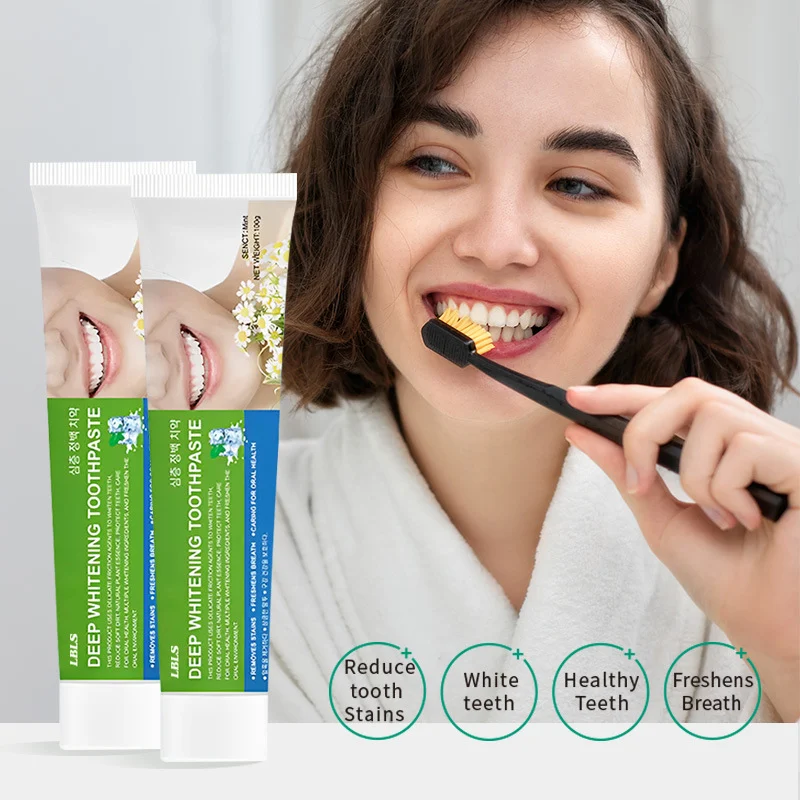
✅ The Truth: This myth is a gift to mediocre products. Formulation is everything. The type of whitening agent, its concentration, the supporting cast of ingredients for gum health and breath freshness, and the overall balance of the formula make a monumental difference. A budget paste might rely solely on harsh abrasives, while a more sophisticated one, like the LBLS Deep Whitening Toothpaste, uses a multi-angle approach. It targets stain “decomposition” and tartar, which addresses the cause of yellowness, not just the surface symptom.
💡 What To Do Instead: Read the active ingredients and claims. Look for a toothpaste that offers a complete strategy: stain removal, tartar control, and oral environment support. A product that also aims to maintain microbial balance and strengthen gingiva is working on the foundation of a white smile, not just painting over the problem.
What Actually Works for a Whiter, Healthier Smile
Forget the fads. Evidence-based oral care is about consistent, gentle, and intelligent practices. First, brush for a full two minutes, twice a day, with a soft-bristled brush—aggressive scrubbing hurts more than helps. Floss daily to remove plaque between teeth where stains start. Be mindful of stain-causing foods and drinks (coffee, red wine, berries), but rather than avoiding them, rinse your mouth with water afterward.
Second, choose your toothpaste like it’s a key member of your health team. You want a formula that targets the problem from multiple sides. This is where a product like LBLS Deep Whitening Toothpaste demonstrates the correct approach. It’s not about one magic bullet; it’s about a system. It combines stain-fighting action with support for your gums and oral microbiome, and it offers that crucial fresh breath confidence. The two suggested methods of use—both involving a foam-focused application—highlight a focus on effective contact with stains and bacteria, not just scrubbing.
Ultimately, a bright smile is a healthy smile. Chasing aggressive, immediate results often backfires. The real game plan is patience, prevention, and using products smart enough to whiten while they protect. Ditch the myths, trust the process, and let your toothpaste do the sophisticated work it’s designed for.

