
Hook: Why this ingredient is trending or controversial
Niacinamide has long been a darling of the skincare world, but its recent migration into your toothpaste tube is raising eyebrows and questions. From fighting blemishes to brightening enamel, the leap from topical skin treatment to oral care active is a bold one. We need to separate the biological plausibility from the marketing hype. Is it a legitimate innovation for dental health, or just another buzzy ingredient seeking a new home? Let’s break down the science of niacinamide in the context of your smile.
What Is Niacinamide?
Niacinamide, also known as nicotinamide, is the amide form of vitamin B3 (niacin). In plain English, it’s a water-soluble vitamin that your cells use to produce energy. Its primary scientific role centers on its function as a precursor to two vital coenzymes: nicotinamide adenine dinucleotide (NAD+) and its phosphate form, NADP+. These coenzymes are fundamental to hundreds of metabolic processes. In skin cells, this translates to supporting the skin barrier, regulating oil production, and calming inflammation. For teeth and gums, the mechanism shifts to cellular energy for repair and modulating the inflammatory response in gum tissue. It doesn’t bleach or scrub like an abrasive or peroxide; instead, it works at a supportive, cellular level.
The Evidence
The research supporting topical niacinamide for skin is robust. For oral health, the evidence is emerging but points in intriguing directions. A 2022 pilot study published in the International Journal of Dental Hygiene investigated a niacinamide-containing mouthwash. Researchers found it significantly reduced levels of interleukin-1β, a key pro-inflammatory cytokine, in the gingival crevicular fluid of subjects with mild gingivitis compared to a placebo rinse. This suggests a tangible anti-inflammatory effect on gum tissue.
Separately, niacinamide’s role in cellular energy metabolism is well-documented. The theory applied to oral care is that by supporting the health of the gingival and mucosal cells, it may create a more resilient oral environment. However, it is crucial to note that most human studies on niacinamide for periodontal support have used direct supplementation, not topical application via toothpaste. More research is needed on long-term effects of its consistent use in dental formulations, specifically its bioavailability and direct action when applied topically in the mouth.
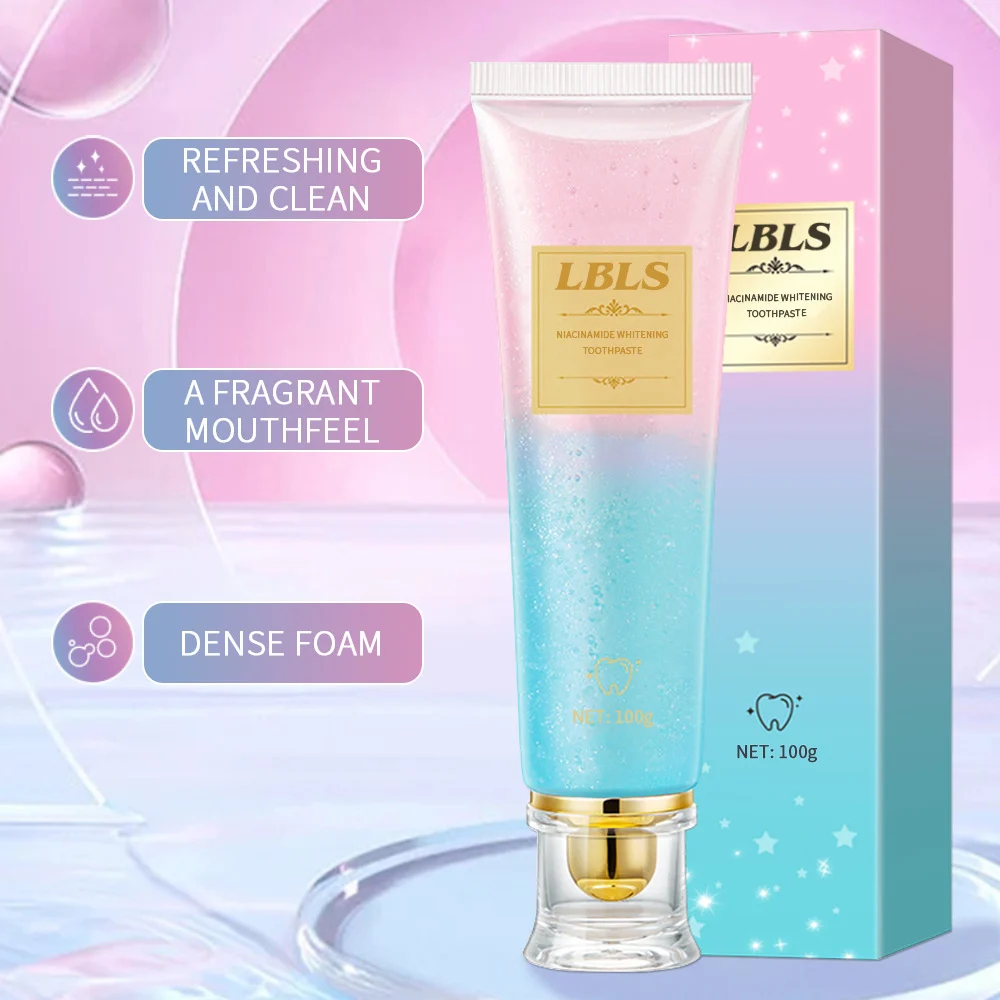
How LBLS Niacinamide Whitening Toothpaste Uses It
Analyzing this product’s approach requires looking at its total formulation, not just the star ingredient. LBLS positions niacinamide not as a bleaching agent but as part of a “gentle formula designed to care for the gums.” This is a smart, science-aligned claim. The toothpaste pairs niacinamide with traditional cleaning and whitening agents. While the exact concentration isn’t disclosed, it is likely formulated to be compatible with other actives and safe for daily use. The key is synergy. Niacinamide’s proposed anti-inflammatory action could theoretically complement the mechanical cleaning of abrasives and the stain-lifting action of other polishing agents. By aiming to calm gum tissue, the formula may reduce sensitivity often associated with whitening products, making the brightening process more comfortable. The mention of “balancing oral microbiota” aligns with niacinamide’s potential to support a healthier oral lining, which can influence the microbial environment.
Related reading: My Month with the “Power of Moonlight”: An Honest LBLS 7X Lotion Review.
Related reading: This Black Hair Shampoo Turned My Greys Dark in 5 Minutes. Here's the Messy Truth..
Who Should (and Shouldn’t) Use It
This toothpaste could be a good fit for individuals looking for a whitening product that also claims gum-care benefits, especially those who experience minor gum sensitivity or irritation with standard whitening pastes. The inclusion of niacinamide targets inflammatory pathways, which may offer ancillary support for gum health alongside brushing and flossing.
It is not a substitute for treatment of active, significant periodontal disease. Anyone with bleeding gums, persistent bad breath, or loose teeth should consult a dentist. The whitening effect will come from other ingredients like hydrated silica (a common gentle abrasive), not the niacinamide itself, so manage expectations accordingly. While adverse reactions to topical niacinamide are rare, individuals with a known allergy to vitamin B3 should avoid it. As with any new product, discontinue use if you experience unusual irritation or discomfort.
The Bottom Line
LBLS Niacinamide Whitening Toothpaste represents an interesting crossover of dermatological science into oral care. The use of niacinamide is a theoretically sound approach for adding a layer of gum-focused, anti-inflammatory support to a routine hygiene product. Its value lies in this potential supportive role, not as a primary whitening agent. Think of it as a toothpaste that may help keep gum tissue happier while you clean your teeth, which is a worthwhile goal. It is an innovative entry in a crowded market, but your fundamental oral health will still rely on consistent mechanical cleaning, fluoride for enamel strength, and regular professional care. If you’re curious about this new category of “cosmeceutical” oral care, this product offers a plausible, science-backed ingredient in a familiar format. Just remember, no toothpaste can replace the fundamentals of good dental hygiene.


tbh using niacinamide on my teeth feels kinda weird, ngl. i’ve tried a few whitening pastes but this one sounds like it might be too harsh for sensitive enamel? have u seen actual results yet?